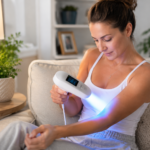

Home-based UVB phototherapy has moved from a niche referral pathway into routine dermatology conversations. Patients show up asking about units for home use – they have read the trial data, they are tired of the commute, they want it removed from their treatment plan. Where they buy the device determines whether the treatment works or goes wrong. This piece walks through how to identify the best online stores for UV lamps in the United States, and why certain online channels are not suitable for a prescription medical device.
What to Look for When Buying a UV Lamp Online
Therapeutic UVB lamps belong to the FDA’s Class II category and clear through the 510(k) premarket notification pathway (1). That clearance number – formatted as K followed by six digits – should appear on the product listing. If it does not, neither should your order. Narrowband UVB systems are cleared for localized treatment of psoriasis, vitiligo, atopic dermatitis, and a number of related inflammatory dermatoses (2).
Wavelength is where shortcuts hurt patients. The therapeutic peak for inflammatory skin disease sits at 311–313 nm; this is the range Elmets and colleagues identified as the working core of contemporary phototherapy (3). A vendor unwilling to document the narrowband UVB output, or one that conflates UVA tanning with therapeutic UVB, is not one to buy from. A home narrowband UVB lamp should carry 1,000-hour Philips medical bulbs, a genuine integrated timer, and a published irradiance figure in mW/cm².
Electrical safety certification is the other half of the equation. IEC 60601-1, together with the home-healthcare collateral standard IEC 60601-1-11, defines the baseline requirements for medical electrical equipment used in the domestic environment (4). A UL listing confirms independent safety review. The CE mark confirms EU conformity.
Top Types of Online Stores for UV Lamps
For residents looking to buy UV lamp online US sources can trust, the question is about channel, not price.
Specialized Medical Device Retailers
Authorized distributors have a direct contractual relationship with the manufacturer. Serial numbers are traceable, the factory warranty applies, and if the device fails there is a real pathway for service. A retailer in this lane asks for the prescription, walks pre-authorization through for the patient, and sends the Instructions for Use before the unit ships – not with it. This is the route I recommend first for a UV lamp for vitiligo or a UV lamp for psoriasis.
Manufacturer-Direct Websites
The other high-trust option is buying straight from the company that built the device. Phothera – which absorbs Daavlin and National Biological after the 2024–2025 merger – ships home units directly to prescribed patients and handles insurance paperwork (5). Original bulbs, serial-matched replacement parts, and direct manufacturer support come as part of the package.
Large Medical / Laboratory Supply Companies
Medical supply houses serving clinics and laboratories sometimes sell to individual patients, provided a prescription is on file. Inventory is wide and logistics are professional. What the buyer usually does not get is clinically trained customer service, which means dose questions go to the prescriber, not the seller.
General E-Commerce Platforms
This is where the trouble lives. In 2021 the FDA tested handheld UV wands sold on Amazon and similar marketplaces and found several emitting UV-C at two-inch distance thousands of times above the ICNIRP exposure limit – enough to produce erythema and photokeratitis in seconds (6). Independent industry testing has repeatedly caught “UVC” bulbs that turn out to be nothing more than UVA blacklights. A listing with no 510(k) number, no registered manufacturer, and no prescription gate is not a medical device, whatever the product page claims.
Specialty Phototherapy & Skin Health Stores
A narrower group of retailers focus solely on phototherapy and related light-based dermatology devices. A UV lamp online store in this category typically provides dosing calculators, lamp replacement schedules, and protocols matched to Fitzpatrick phototype. Browse the home UV phototherapy device options to compare specs side by side.
How to Verify an Online Store
Verification starts, and sometimes ends, in the FDA’s public databases. The 510(k) Premarket Notification Database shows whether a specific device model has been cleared for the intended indication (1). The Establishment Registration and Device Listing database confirms the manufacturer is current with the FDA. A K-number the databases do not know is a K-number that does not exist.
Beyond the FDA check, a legitimate seller has the Instructions for Use on hand and will email them on request. Bulb hours and replacement pricing should appear in writing, not as something discussed after the purchase. The company should operate a U.S. address and a phone line that a real person answers during business hours. Clinician reviews, where the buyer can find them, carry more weight than aggregated purchaser ratings.
Payment, Shipping & Returns
Pay with a credit card or PayPal. Wire transfer and cryptocurrency provide no dispute protection worth the name. Phototherapy units need shock-resistant packaging because fluorescent UVB bulbs are fragile; good sellers use padded crates and tracked shipping. Medicare Part B covers home phototherapy as durable medical equipment at 80/20 coinsurance after the annual deductible. Liao and colleagues reported that up to 80% of patients obtain at least partial coverage when the retailer helps push pre-authorization through with a letter of medical necessity (7). An FDA cleared UV lamp bought through an authorized distributor generally fits this reimbursement pathway.
Safety Tips After Purchase
Start treatment only under dermatologist supervision. The prescriber sets the starting dose from the patient’s Fitzpatrick phototype, checks the medication list for photosensitizers (tetracyclines, diuretics, retinoids among the common offenders), and sets the follow-up schedule. When the unit arrives, look it over – cord, housing, bulb, timer – before plugging it in.
Eye protection is not negotiable. The FDA performance standard at 21 CFR 1040.20 requires manufacturers to supply eyewear with spectral transmittance below 0.001 across the 200–320 nm range (8). A brief unshielded exposure to 311 nm narrowband UVB can produce painful photokeratitis. Cover lips, genitals, and pigmented lesions during treatment. Philips NB-UVB bulbs are rated for roughly 1,000 hours, but replacement around the 350-hour mark is standard practice because irradiance drops as the bulb ages. Store the unit somewhere dry and reasonably stable – moisture and knocks are its two enemies.
Annual dermatologic examination stays on the calendar, and home phototherapy logs should travel with the patient to each visit. The LITE Study in JAMA Dermatology (2024) confirmed that home-based narrowband UVB is clinically comparable to office-based treatment for plaque and guttate psoriasis (9). That finding reinforces the retailer question rather than softening it: the device has to actually be therapeutic UVB.
Conclusion
The best online stores for UV lamps are the ones that live inside the FDA framework for prescription phototherapy, not the ones that skirt it. Authorized distributors, manufacturer-direct sellers, and specialty phototherapy retailers remain the defensible routes to acquire a home UV phototherapy device. Cross-checking the 510(k) database, asking for documentation, and working with a supervising dermatologist are what separate therapeutic UVB from the unsafe UV products that continue to drift across unregulated marketplaces (10). Speak to a dermatologist before buying, and make sure the product is in fact an FDA cleared UV lamp appropriate for the diagnosis at hand.
References
-
U.S. Food and Drug Administration. Medical Device Safety and the 510(k) Clearance Process. fda.gov/medical-devices/510k-clearances/medical-device-safety-and-510k-clearance-process
-
U.S. Food and Drug Administration. 510(k) Premarket Notification Database. accessdata.fda.gov/scripts/cdrh/cfdocs/cfpmn/pmn.cfm
-
Elmets CA, Lim HW, Stoff B, et al. Joint American Academy of Dermatology–National Psoriasis Foundation guidelines of care for the management and treatment of psoriasis with phototherapy. J Am Acad Dermatol. 2019;81(3):775–804.
-
International Electrotechnical Commission. IEC 60601-1-11:2015 – Medical electrical equipment: Requirements for medical electrical equipment and systems used in the home healthcare environment. iso.org/standard/65529.html
-
Phothera. Introducing Phothera: A New Era in Home Phototherapy. phothera.com/introducing-phothera
-
U.S. Food and Drug Administration. Do Not Use Ultraviolet (UV) Wands That Give Off Unsafe Levels of Radiation: FDA Safety Communication. fda.gov/medical-devices/safety-communications
-
Liao W, Nguyen M, Zoghi S, Feldman SR. A Practical Approach to Home UVB Phototherapy for the Treatment of Generalized Psoriasis. Pract Dermatol. 2010;7(2):31–35. PMC4151182.
-
Code of Federal Regulations, Title 21, Section 1040.20 – Sunlamp products and ultraviolet lamps intended for use in sunlamp products. ecfr.gov
-
Gelfand JM, Armstrong AW, Lim HW, et al. Home- vs office-based narrowband UVB phototherapy for plaque or guttate psoriasis: the LITE randomized clinical trial. JAMA Dermatology. 2024.
-
National Psoriasis Foundation. Light Therapy for Psoriasis. psoriasis.org/phototherapy