
Introduction
The search term “uv lamps allergies” pulls up a flood of consumer devices, all promising easier breathing. There’s a real problem behind the marketing – most U.S. homes do carry pollen, mold spores, mite debris, dander, and traces of cockroach allergen in the air. EPA classifies these biological pollutants as documented triggers of rhinitis and asthma in sensitized people (1). The useful question is clinical, not commercial. Of those allergens, which ones does UV touch? Which ones doesn’t it? In day-to-day terms, uv lamps for allergies fall into the same bucket as a HEPA filter or a dehumidifier – a tool for the room, not a prescription.
How UV Lamps Work in Indoor Air Systems
Two abbreviations appear in the clinical and engineering literature for the same technology: UVGI (ultraviolet germicidal irradiation) and the newer CDC label GUV (germicidal ultraviolet). Both refer to UV energy used indoors to inactivate microbes (2). Residential equipment sold in the U.S. is built almost entirely around low-pressure mercury lamps with peak emission at 254 nm in the UV-C band.
UV-C Light and Microorganisms
UV-C photons induce photochemical damage in microbial DNA and RNA, primarily through pyrimidine dimer formation. A cell with that level of nucleic acid damage cannot reproduce. CDC describes UVGI fixtures as sources of UV-C at wavelengths shorter than UV-A or UV-B, able to inactivate viruses, bacteria, and fungi (3). Real-world inactivation in any given installation is governed by delivered dose (irradiance × time), ambient humidity, the species being targeted, and whether the lamp has a clear line of sight to the contaminated surface.
Where Home UV Systems Are Installed
For uv light for indoor air quality use in U.S. homes, three setups dominate:
-
Inside HVAC ductwork, especially over the evaporator coil and drain pan, where moisture supports microbial film.
-
Inside the chamber of a standalone air purifier, almost always paired with a filter stage.
-
Upper-room fixtures that disinfect air above occupants in a sealed UV “zone.” Uncommon at home; mostly seen in clinics, shelters, and waiting rooms.
EPA describes UVGI cleaners as devices that may destroy biological pollutants – viruses, bacteria, allergens, and molds – that are airborne or growing on HVAC surfaces such as cooling coils, drain pans, or ductwork (4).
Can UV Lamps Reduce Allergy Symptoms?
This is the section where marketing and reality often part ways. Honest version: UV addresses microbial sources of certain allergens. It does not, in any reliable home configuration, neutralize allergen particles already drifting through the room.
UV Lamps and Mold Allergies
Mold is the clearest win for uv-c and allergens. AC coils stay damp by design, drain pans hold standing water, and the duct interior is dark and quiet – ideal conditions for fungal biofilm. A UV-C lamp mounted to bathe those wet surfaces in continuous radiation cuts colonization substantially over time (5). For homes where mold is the dominant allergy driver – and EPA identifies mold as a documented trigger of allergic rhinitis and asthma attacks (6) – uv light mold removal inside the air handler is the most defensible UV application you can make.
UV and Dust Mite Allergens
Dust mites themselves rarely fly. Their allergens – body and fecal fragments – settle into mattresses, carpets, and upholstered furniture. UV-C does not denature these protein allergens in any practical home dose, and it cannot reach mites buried inside fabric or padding. Mite control runs through humidity. EPA recommends keeping indoor relative humidity between 30 and 50 percent, washing bedding in hot water (130 °F), and using allergen-proof mattress encasements (7). UV plays no direct role here.
UV and Pet Dander
Dander is a particle problem, not a microbial one. The proteins responsible for cat and dog allergy stay allergenic whether a UV photon hits them or not. The only effective removal route is mechanical capture – HEPA filtration, frequent vacuuming, keeping pets out of bedrooms. UV does nothing for dander (8).
Benefits of Using UV Lamps for Indoor Allergy Control
1. Reduces Mold Spores in HVAC Systems
The strongest case for any hvac uv systems usa installation. Killing biofilm before it sporulates means fewer mold particles entering the supply air.
2. Enhances Air Purification When Combined With Filters
EPA is explicit: UVGI should be used with – not instead of – filtration (4). Run a high-MERV or HEPA filter for particles, and let UV handle microbial growth on the wet metal. This pairing is the foundation of any serious allergies indoor air solutions plan.
3. Improved HVAC Efficiency and Cleaner Airflow
Coils that stay clear of biofilm transfer heat better. The system runs less, draws less power, and pushes cleaner air through the supply registers. A modest side benefit, but real.
Limitations of UV Lamps for Allergies
UV Cannot Remove Particulate Allergens
Pollen, dust, dander – physical particles that need physical capture. UV light won’t pull a single grain of birch pollen out of the air.
Shadowing Issues
UV only acts on what it lights up. Anything behind a duct bend, inside porous insulation, or buried in filter media is shielded. For uv-C allergies questions, this matters: spores deep inside a contaminated filter aren’t being touched by the lamp downstream of them.
Requires Proper Installation to Be Effective
Mount distance, lamp wattage, airflow speed, and reflectivity of surrounding metal all change the delivered dose. A retail UV bulb screwed into a return duct without engineering input may produce almost no useful kill (9).
Are UV Lamps Safe for Home Use?
Safety is the single most important uv health usa topic for buyers.
Avoid Direct UV Exposure
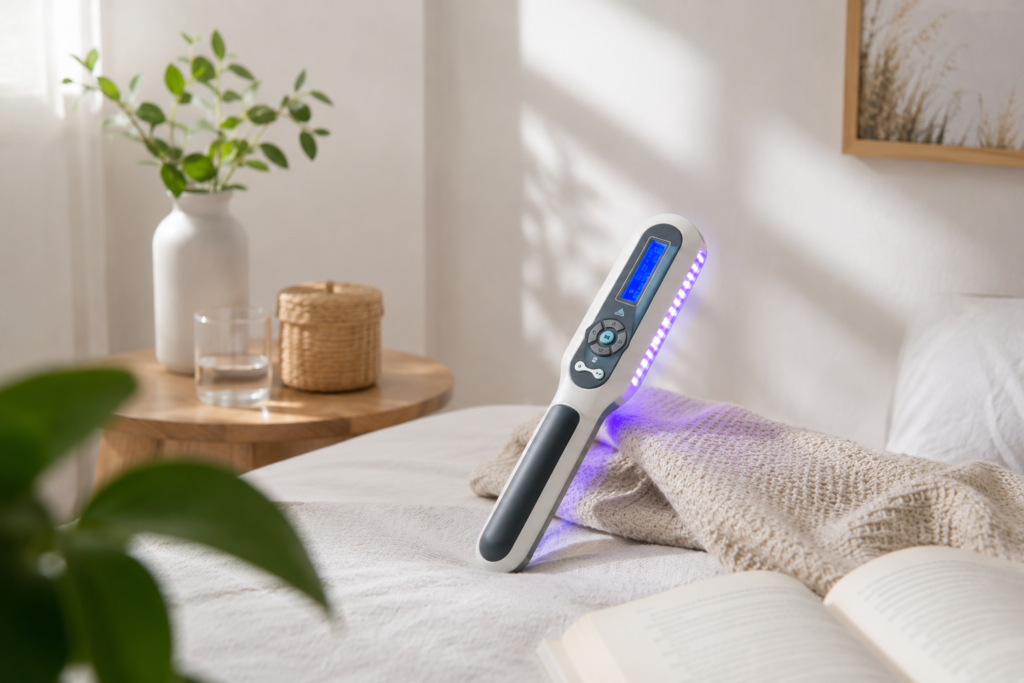
UV-C causes photokeratitis – a painful corneal burn – and skin reactions resembling sunburn. FDA tells consumers never to look directly at a UV-C source, even for a moment, and has identified specific UV “wand” products on the U.S. market that emit unsafe radiation and should not be used (10).
Certified Products Only
For uv health usa peace of mind, choose UL-listed equipment from manufacturers with a verifiable track record. Sealed in-duct fixtures keep all UV-C inside the air handler; nothing escapes into the room.
Safe HVAC Installation
The lamp belongs inside ductwork or the air handler cabinet. No supply or return opening should be in direct line of sight of the bulb. Power must be cut before any service panel comes off. These are not optional details – they are how the entire safety case for hvac uv systems usa holds together.
Best Ways to Use UV Lamps for Allergy Management at Home
Combine UV with HEPA Filtration
For uv home air purification, this is the gold-standard combination. Filter pulls particles; lamp keeps the wet surfaces clean.
Keep HVAC Coils Clean
UV slows biofilm but doesn’t replace annual coil and drain-pan service. Schedule a tech visit each year.
Use UV in High-Humidity Areas
Basements, crawl spaces, laundry rooms, bathrooms with poor exhaust. Pair the lamp with a dehumidifier – EPA’s 30–50 percent humidity range applies here too (7).
Regular Lamp Replacement Schedule
UV-C output drops well before the bulb visibly fails. Manufacturer guidance and ASHRAE practice both point to annual replacement to keep the germicidal dose where it needs to be.
Who Should Consider UV Lamps?
Homes with mold-sensitive occupants. Households in the humid Southeast or Gulf Coast. Older central systems that have already had coil mold issues. People who have already addressed the easy stuff – filtration, humidity, source removal – and still need another layer. If pollen or dander is the main trigger, the budget belongs in filtration first.
Conclusion
Within the air handler itself, uv lamps for allergies can reduce microbial colonization on wet surfaces and lower the spore load reaching the supply registers. Beyond that, the technology offers nothing – no dust capture, no dander removal, no effect on pollen, and no impact on the immunologic basis of allergic disease. The defensible setup is layered. Address the moisture or contamination source first. Hold relative humidity below 50 percent. Run HEPA-grade filtration. Service the HVAC system on schedule. Add UV-C at the coil only where the clinical case for it is clear.
References
-
U.S. Environmental Protection Agency. Biological Pollutants’ Impact on Indoor Air Quality. https://www.epa.gov/indoor-air-quality-iaq/biological-pollutants-impact-indoor-air-quality
-
CDC / NIOSH. About Germicidal Ultraviolet (GUV). https://www.cdc.gov/niosh/ventilation/germicidal-ultraviolet/index.html
-
Centers for Disease Control and Prevention. Upper-Room Ultraviolet Germicidal Irradiation (UVGI) – factsheet.
-
U.S. Environmental Protection Agency. Guide to Air Cleaners in the Home. https://www.epa.gov/sites/default/files/2014-07/documents/aircleaners.pdf
-
Lawrence Berkeley National Laboratory – Indoor Air Quality Scientific Findings Resource Bank. Using UV Germicidal Lights for Air Cleaning. https://iaqscience.lbl.gov/using-uv-germicidal-lights-air-cleaning
-
U.S. Environmental Protection Agency. Care for Your Air: A Guide to Indoor Air Quality. https://www.epa.gov/indoor-air-quality-iaq/care-your-air-guide-indoor-air-quality
-
U.S. Environmental Protection Agency. A Brief Guide to Mold, Moisture, and Your Home. https://www.epa.gov/mold/brief-guide-mold-moisture-and-your-home
-
U.S. Environmental Protection Agency. The Inside Story: A Guide to Indoor Air Quality. https://www.epa.gov/indoor-air-quality-iaq/inside-story-guide-indoor-air-quality
-
U.S. Environmental Protection Agency. Residential Air Cleaners (Second Edition): A Summary of Available Information.
-
U.S. Food and Drug Administration. Beware of Ultraviolet Wands That Give Off Unsafe Levels of Radiation. https://www.fda.gov/consumers/consumer-updates/beware-ultraviolet-uv-wands-give-unsafe-levels-radiation